Search This Blog

Wednesday, November 25, 2009

Beginners Guide to Beethoven


Ludwig van Beethoven is one of the world's most famous and influential composers of classical music. His music has been played all over the world for over 180 years. However, there are many people out there left in the dark about the facts, life, and music of Beethoven. In this Beginners Guide to Beethoven, you'll find links to biographies, histories, CD recommendations, and sound clips of Beethoven's music.

Who is Beethoven?

Ludwig van Beethoven, perhaps the most famous composer of all time, apart from his other works, only wrote nine symphonies. Compare that to Haydn and Mozart, who, combined, wrote over 150 symphonies! What made Beethoven special was his successful attempt to break the mold of the highly structured and refined rules of classical period composition. Many view Beethoven as the bridge connecting the classical period to the romantic period.

Interesting Beethoven Facts


Beethoven’s Symphonies

It took Beethoven twenty-five years to compose all nine symphonies. He was very meticulous about his work, often reworking it many times over. This obsessive desire to perfect his music may have been caused in part to his loss of hearing while in his 20’s. How could he be taken seriously as a composer if he couldn’t hear his own music? Nevertheless, his efforts have made a profound impact in the world. Nearly 180 years later, orchestras all over the globe are playing his symphonies, people are buying them on CDs, and millions of people are listening to them on television and radio. Beethoven's Symphony No. 3 (Eroica), Symphony No. 5, and Symphony No. 9 (Ode to Joy or Choral Symphony) are his most famous symphonies.

Watch and listen to Beethoven’s Symphonies

No One-Hit Wonders for Beethoven

Far be it from one-hit wonders, most of Beethoven's music is extremely popular. Apart from Beethoven's symphonies, his other works have been and are just as influential. Beethoven’s Moonlight Sonata and Fur Elise are Beethoven’s most famous piano works. It’s safe to say that anyone reading this has heard either one of these pieces. Hear clips of Beethoven’s Moonlight Sonata and Fur Elise to refresh your memory. As well as his piano sonatas, Beethoven’s string quartets and concertos are also among his most popular works.

6 Highly Recommended Beethoven Music CDs

Beethoven’s music is everywhere, so for the beginner, which Beethoven music albums are worth purchasing? Here are 6 Beethoven music albums personally selected to provide you with a high quality, cross-section cut of Beethoven music. From the complete recordings of all nine symphonies, piano sonatas, and string quartets, as well as several concertos, you can successfully create a Beethoven "mini" music library.


Tuesday, November 24, 2009

Glimpses of Jim


In the late 1950s and 1960s there were a number of journalists who wrote about the rock scene, the protest movement, and the literary underground--that maelstrom of social unrest that later became known as "the counterculture." Some of these journalists became pop (or semi-pop) idols themselves: Tom Wolfe (of New York magazine), Esquire's Gay Talese, and Jann Wenner, cofounder and editor of Rolling Stone. Far lesser known (as well as under appreciated) was a working reporter for the New York Post named Al Aronowitz.
Back in the 1950s Aronowitz tracked down and interviewed Jack Kerouac in a small Long Island town called Northport where the author had gone to live with his mother, Memere, to escape the hullabaloo following the publication of On the Road; the interview has been quoted by legions of Kerouac biographers. In 1960 Aronowitz did another seminal interview with Neal Cassady when the latter was in San Quentin for marijuana smuggling.
Until the 1960s faded into the Age of Reagan, Aronowitz followed them all--Dylan, Mailer, the Stones--through the ups and downs of their careers. One legendary figure the reporter knew--but never formally interviewed--was Jim Morrison. Here, in an exclusive interview with American Legends--conducted over a period of several months via e-mail--Al Aronowitz recalls glimpses of Jim.
This interview was posted shortly after AL went on-line in 1996. Al Aronowitz later became a strong friend and supporter. He died in 2005, leaving behind many friends and admirers.

Glimpses of Jim

Interview with Al Aronowitz

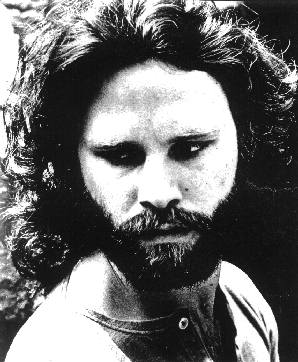
Morrison thought of himself as a poet.
(Photo courtesy of Patricia Kennealy Morrison.)

In the late 1950s and 1960s there were a number of journalists who wrote about the rock scene, the protest movement, and the literary underground--that maelstrom of social unrest that later became known as "the counterculture." Some of these journalists became pop (or semi-pop) idols themselves: Tom Wolfe (of New York magazine), Esquire's Gay Talese, and Jann Wenner, cofounder and editor of Rolling Stone. Far lesser known (as well as under appreciated) was a working reporter for the New York Post named Al Aronowitz.
Back in the 1950s Aronowitz tracked down and interviewed Jack Kerouac in a small Long Island town called Northport where the author had gone to live with his mother, Memere, to escape the hullabaloo following the publication of On the Road; the interview has been quoted by legions of Kerouac biographers. In 1960 Aronowitz did another seminal interview with Neal Cassady when the latter was in San Quentin for marijuana smuggling.
Until the 1960s faded into the Age of Reagan, Aronowitz followed them all--Dylan, Mailer, the Stones--through the ups and downs of their careers. One legendary figure the reporter knew--but never formally interviewed--was Jim Morrison. Here, in an exclusive interview with American Legends--conducted over a period of several months via e-mail--Al Aronowitz recalls glimpses of Jim.

This interview was posted shortly after AL went on-line in 1996. Al Aronowitz later became a strong friend and supporter. He died in 2005, leaving behind many friends and admirers.

Sunday, November 22, 2009

Jimi Hendrix Biography (1942–1970)


Guitarist, singer, and songwriter. Born Johnny Allen Hendrix (later changed to James Marshall) on November 27, 1942, in Seattle, Washington. Learning to play guitar as a teenager, Hendrix grew up to become a rock guitar legend. He had a difficult childhood, sometimes living in the care of relatives and even acquaintances at times.

His mother, Lucille, was only 17 years old when Hendrix was born. She had a stormy relationship with his father, Al, and eventually left the family after the couple had two more children together, sons Leon and Joseph. Hendrix would only see his mother sporadically before her death in 1958.

In many ways, music became a sanctuary for Hendrix. He was a fan of blues music and taught himself to play guitar. At the age of 14, Hendrix saw Elvis Presley perform. He got his first electric guitar the following year and eventually played with two bands—the Rocking Kings and the Tomcats. In 1959, Hendrix dropped out of high school. He worked odd jobs while continuing to follow his musical aspirations.

Hendrix enlisted in the United States Army in 1961 and trained at Fort Ord in California to become a paratrooper. Even as a soldier, he found time for music, creating a band named The King Casuals. Hendrix served in the army until 1962 when he was discharged due to an injury.

After leaving the military, Hendrix pursued his music, working as a session musician and playing backup for such performers as Little Richard, Sam Cooke, and the Isley Brothers. He also formed a group of his own called Jimmy James and the Blue Flames, which played gigs around New York City's Greenwich Village neighborhood.

In mid-1966, Hendrix met Chas Chandler, a former member of the Animals, a successful rock group, who became his manager. Chandler convinced Hendrix to go to London where he joined forces with musicians Noel Redding and Mitch Mitchell to create The Jimi Hendrix Experience. While there, Hendrix built up quite a following among England's rock royalty. Members of the Beatles, the Rolling Stones, the Who, and Eric Clapton were all great admirers of Hendrix's work. One critic for the British music magazine Melody Maker said that he "had great stage presence" and looked at times as if he was playing "with no hands at all."

Released in 1967, the band's first single, "Hey Joe" was an instant smash in Britain, and was soon followed by other hits such as "Purple Haze" and "The Wind Cried Mary." On tour to support his first album, Are You Experienced? (1967), Hendrix delighted audiences with his outrageous guitar-playing skills and his innovative, experimental sound. He won over American music fans with his stunning performance at the Monterey Pop Festival in June 1967, which ended with Hendrix lighting his guitar on fire.

Quickly becoming a rock music superstar, Hendrix scored again with his second album, Axis: Bold as Love (1968). His final album as part of the Jimi Hendrix Experience, Electric Ladyland (1968), was released and featured the hit "All Along the Watchtower," which was written by Bob Dylan. The band continued to tour until it split up in 1969.

The Beatles as Poets


he Beatles were more than musicians, they were also poets. John and Paul collaborated on writing most of the Beatles' lyrics. Many times, the result was brilliant poetry set to music. One such occasion was the penning of the lyrics to Eleanor Rigby, from their "Revolver" album released in August of 1966. We're pleased to present an article that offers insight into the process that the Beatles, and writers of all kinds, have gone through in order to marshall their works from conception to completion.

The Beatles appeared on the Ed Sullivan show February 9th of 1964 and American pop music was changed in an instant. Over 70 million viewers turned in, and Beatlemania in America was born. By the first week in April, the Beatles held the top 5 spots in Billboard's Hot 100. Prior to the Beatles, rock in America had stagnated. Unexciting crooners sang songs cranked out by a small group of songwriting "factories". The Beatles wrote their own songs and delivered them with boundless vitality and enthusiasm. Their popularity, and that of the ensuing British Invasion, sparked countless legions of young people to purchase guitars and drums. They joined in groups who hoped to follow in the Beatles footsteps, thus creating the worldwide Garage Rock phenomenon.

Musicians who write lyrics to be sung over their melodies engage in a process that is similar to that of all poets and writers. A seed of an idea becomes lodged in the imagination of the writer. An iterative process ensues where word clusters associatively bring to mind related concepts. The mind clarifies these notions into phrases which invoke the next round of thoughts. The prepared wordsmith keeps a notepad handy at all times to record the resulting output. Eventually a mature, fully developed work emerges and the author releases it into the world.

Here in the 21st century, writers have the resources of the world-wide-web at their fingertips. There is advice and councel for every step of the process. If you are a writer looking for insight and assistance, begin by reading the article that we present, below. Then, visit JanTheProofer's site and read the articles in the "Grammar and Writing" section. A concise discussion of the five steps in the Writing Process can be found at this page. Comprehensive Writer's Resource web sites include Writers Write, WritersNet and WritersWeekly.

The Beatles have a web site! Click here to visit their site.

Bob Marley Biography


Early Life

Robert Nesta Marley was born on the 6th of February 1945 in the Saint Ann Parish of Jamaica. His father Norval Sinclair Marley was a white man in his 50s and his mother Cedella Booker was a black woman who was 18 years old. Due to this, he suffered a lot of racial prejudice in his childhood. Although his father provided the family with financial support, he was away most of the time on his work related trips. Bob Marley was ten years old when his father died.

His family moved to the Trenchtown slum in Kingston after his father died. Since he was of a short stature and due to his mixed origins, Bob Marley had to endure a lot of bullying. So he learnt self defense and eventually gained a lot of physical strength. This earned him the nickname of ‘Tuff Gong’.

This is also the time he met Neville Livingston (later known as Bunny Wailer) and they began playing music together. At 14 he apprenticed at a local welder’s shop and began to make music in his free time with Livingston and Joe Higgs, who was a local musician and a devout Rastafarian. It was at one such jam session, that Bob Marley also met Peter McIntosh (later known as Peter Tosh).

Bob Marley History

In 1962, Bob recorded his first two singles called ‘Judge Not’ and ‘One Cup of Coffee’ with Leslie Kong under the pseudonym Bobby Martell. Later on he and Leslie split up due to money issues.

In 1963 Bob Marley, Bunny Livingstone and Peter Tosh and others joined together to form a band. They initially called themselves ‘The Teenagers’ but later on changed the names several times, finally settling themselves on the name ‘The Wailers’. Bob Marley began to sing along with composing the music and lyrics for the band. They recorded two songs called ‘I’m Still Waiting’ and ‘It Hurts to be Alone’ with record producer Clement Dodd. Dodd also gave Bob a place to stay in the back room of the recording studio and in return Bob would do assignments for Dodd.

In one such assignment, where Bob was coaching a group of vocal singers called ‘The Soulettes’, Bob met Rita Anderson. He later married her in 1966.

While with Dodd, The Wailers recorded several songs. However, one of them called ‘One Love’ became extremely popular. Comprised of elements from the Rastafarian faith, the song called for unity, peace and love. This song was completely different from the radical and sometimes anti-authority songs that The Wailers used to sing.

Bob Marley also recorded the song ‘Simmer Down’ in 1964 with Dodd which became extremely popular and made The Wailers one of the top bands in Jamaica. They then followed it up with ‘Soul Rebel’ and ‘400 Years’.

In 1966 after marrying Rita Anderson, he moved with his mother in Wilmington, Delaware. However, less money and record producers wanting him to compromise on his Rastafarian messages in his songs meant a lot of conflict in his life. Therefore, he came back to Jamaica and began working in a factory to earn his living. Marley also began wearing his trademark dreadlocks in keeping with his Rastafarian faith.

Between 1968 and 1972, The Wailers along with Rita Marley tried to re-cut a few of their old songs with JAD Records in London. However, this did not prove to be a very good idea.

Then, in 1973 The Wailers released their first album worldwide. It was called ‘Catch a Fire’ which did quite well. Then a year later, they released another album titled ‘Burnin’. This album included their hit songs like ‘Get Up, Stand Up’ and ‘I Shot the Sheriff’. This introduced Marley on the international stage.

In 1974, The Wailers broke up with each of the three band members wanting to pursue solo careers. But Bob Marley continued calling his band ‘Bob Marley and The Wailers’ and teamed up with new members to form another band. These included Carlton and Aston ‘Family Man’ Barrett (drums and bass), Junior Marvin and Al Anderson (lead guitar), Tyrone Downie and Earl ‘Wya’ Lindo (keyboards), Alvin ‘Seeco’ Patterson (percussion), and the ‘I Threes’ (backing vocals) which included his wife Rita.

In 1975 Bob Marley had his first international hit ‘No Woman, No Cry’. After this he released his album ‘Rastaman Vibration’ in 1976 which became a Billboard chart topper for four weeks.

In December 1976, Bob Marley, his wife and his manager Don Taylor were wounded in an assassination attempt made before the ‘Smile Jamaica’ concert. Marley’s wife and manager were seriously wounded, and Bob Marley had just some minor wounds. They all recovered, and Bob went on to play at the concert.

Bob Marley then went to London and recorded his next two albums ‘Exodus’ and ‘Kaya’ which included the hit songs ‘Exodus’, ‘Waiting in Vain’, ‘Jamming’ and ‘One Love’. ‘Exodus’ stayed on the British music charts for 56 consecutive weeks. He was also arrested for possession of a small amount of cannabis.

Death

In 1977, Bob Marley was diagnosed with cancer. He had sustained an injury on right toe which had never healed. But Bob Marley refused to go ahead with any amputation surgery as it was against the Rastafarian faith. His strong faith in his religion meant that he had to keep his body ‘whole’ and also that he should not register a will as it would symbolize the acceptance of death as inevitable, thus giving a total disregard for the concept of everlasting life. Rastafarian faith also believed that smoking marijuana was an uplifting experience which would connect the human body to the divine.

Eventually the cancer spread to his lungs, liver, stomach and brain. However, he continued to play on in concerts and recording albums such as ‘Survival’ in 1979 and ‘Uprising’ in 1980.

Bob Marley died on the 11th of May, 1981 at Cedars of Lebanon Hospital in Miami, Florida. He was 36. His final words to his son Ziggy were ‘Money can’t buy life’. As per his wishes, he was buried with his guitar, a soccer ball, a marijuana bud, a ring given to him by the Prince Asfa Wossen of Ethiopia and a Bible.

After Death

After his death, too, Bob Marley’s reputation as a great singer and Rastafarian continued to add to his popularity and fame.

Bob Marley received many posthumous awards, including the Grammy Lifetime Achievement Award in 2001 and the induction into the Rock and Roll Hall of Fame.

This Bob Marley biography is an account of this great musician and his contribution to the Rastafarian faith. He popularized the tenets of the faith through his music and his life. He was revered by many as a ‘prophet’ or a ‘messiah’ for his religion. He propagated many thoughts including radical non-violent action. To put it in his words:

‘Emancipate yourselves from mental slavery
None but ourselves can free our minds...’

By Madhavi Ghare

Michael Jackson, pop music legend, dead at 50

By Todd Leopold
CNN
Decrease font Decrease font
Enlarge font Enlarge font

(CNN) -- Michael Jackson, the show-stopping singer whose best-selling albums -- including "Off the Wall," "Thriller" and "Bad" -- and electrifying stage presence made him one of the most popular artists of all time, died Thursday, CNN has confirmed.
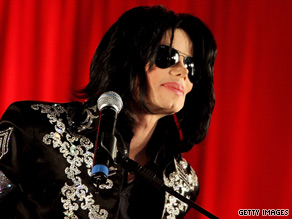
Michael Jackson, shown in 2008, was one of the biggest pop stars in history.

Michael Jackson, shown in 2008, was one of the biggest pop stars in history.

He was 50.

He collapsed at his residence in the Holmby Hills section of Los Angeles, California, about noon Pacific time, suffering cardiac arrest, according to brother Randy Jackson. He died at UCLA Medical Center.

Lt. Fred Corral of the Los Angeles County Coroner's Office said an autopsy would probably be done on the singer Friday, with results expected that afternoon. Video Watch crowds gather at Jackson's hospital »

"Michael Jackson made culture accept a person of color," the Rev. Al Sharpton said. "To say an 'icon' would only give these young people in Harlem a fraction of what he was. He was a historic figure that people will measure music and the industry by."

Jackson's blazing rise to stardom -- and later fall from grace -- is among the most startling of show business tales. The son of a steelworker, he rose to fame as the lead singer of the Jackson 5, a band he formed with his brothers in the late 1960s. By the late '70s, as a solo artist, he was topping the charts with cuts from "Off the Wall," including "Rock With You" and "Don't Stop 'Til You Get Enough." Video Watch Jackson perform at a 1988 concert »

In 1982, he released "Thriller," an album that eventually produced seven hit singles. An appearance the next year on a Motown Records 25th-anniversary special cemented his status as the biggest star in the country. Timeline: The life of Michael Jackson »

For the rest of the 1980s, they came no bigger. "Thriller's" follow-up, 1987's "Bad," sold almost as many copies. A new Jackson album -- a new Jackson appearance -- was a pop culture event. iReport: Share your memories of Michael Jackson

The pop music landscape was changing, however, opening up for rap, hip-hop and what came to be called "alternative" -- and Jackson was seen as out of step.

His next release, 1991's "Dangerous," debuted at No. 1 but "only" produced one top-ranking single -- "Black or White" -- and that song earned criticism for its inexplicably violent ending, in which Jackson was seen smashing car windows and clutching his crotch.

And then "Dangerous" was knocked out of its No. 1 spot on the album charts by Nirvana's "Nevermind," an occurrence noted for its symbolism by rock critics.

After that, more attention was paid to Jackson's private life than his music career, which faltered. A 1995 two-CD greatest hits, "HIStory," sold relatively poorly, given the huge expense of Jackson's recording contract: about 7 million copies, according to Recording Industry of America certifications.

A 2001 album of new material, "Invincible," did even worse.

In 2005, he went to trial on child-molestation charges. He was acquitted.

In July 2008, after three years away from the spotlight, Jackson announced a series of concerts at London's O2 Arena as his "curtain call." Some of the shows, initially scheduled to begin in July, were eventually postponed until 2010. Watch the reaction to Jackson's passing

Rise to stardom

Michael Jackson was born August 29, 1958, to Joe Jackson, a Gary, Indiana, steelworker, and his wife, Katherine. By the time he was 6, he had joined his brothers in a musical group organized by his father, and by the time he was 10, the group -- the Jackson 5 -- had been signed to Motown. Watch Michael Jackson's life in video

He made his first television appearance at age 11.

Jackson, a natural performer, soon became the group's front man. Music critic Langdon Winner, reviewing the group's first album, "Diana Ross Presents the Jackson 5," for Rolling Stone, praised Michael's versatile singing and added, "Who is this 'Diana Ross,' anyway?"

The group's first four singles -- "I Want You Back," "ABC," "The Love You Save" and "I'll Be There" -- went to No. 1 on the Billboard pop chart, the first time any group had pulled off that feat. There was even a Jackson 5 cartoon series on ABC. Video Watch reaction from Motown Studios »

In 1972, he hit No. 1 as a solo artist with the song "Ben."

The group's popularity waned as the '70s continued, and Michael eventually went solo full time. He played the Scarecrow in the 1978 movie version of "The Wiz," and released the album "Off the Wall" in 1979. Its success paved the way for "Thriller," which eventually became the best-selling album in history, with 50 million copies sold worldwide.

At that point, Michael Jackson became ubiquitous.

Seven of "Thriller's" nine cuts were released as singles; all made the Top Ten. The then-new cable channel MTV, criticized for its almost exclusively white playlist, finally started playing Jackson's videos. They aired incessantly, including a 14-minute minimovie of the title cut. ("Weird Al" Yankovic cemented his own stardom by lampooning Jackson's song "Beat It" with a letter-perfect parody video.)

On the Motown Records' 25th-anniversary special -- a May 1983 TV extravaganza with notable turns by the Temptations, the Four Tops and Smokey Robinson -- it was Michael Jackson who stopped the show.

Already he was the most popular musician in America, riding high with "Thriller." But something about his electrifying performance of "Billie Jean," complete with the patented backward dance moves, boosted his stardom to a new level. Video Watch Jackson perform "Thiller" »

People copied his Jheri-curled hair and single-gloved, zippered-jacket look. Showbiz veterans such as Fred Astaire praised his chops. He posed for photos with Ronald and Nancy Reagan at the White House. Paul McCartney teamed with him on three duets, two of which -- "The Girl Is Mine" and "Say Say Say" -- became top five hits. Jackson became a Pepsi spokesman, and when his hair caught fire while making a commercial, it was worldwide news.

It all happened very fast -- within a couple years of the Motown special. But even at the time of the "Motown 25" moonwalk, fame was old hat to Michael Jackson. He hadn't even turned 25 himself, but he'd been a star for more than half his life. He was given the nickname the "King of Pop" -- a spin on Elvis Presley's status as "the King of Rock 'n' Roll" -- and few questioned the moniker.

Relentless attention

But, as the showbiz saying has it, when you're on top of the world, there's nowhere to go but down. The relentless attention given Jackson started focusing as much on his eccentricities -- some real, some rumored -- as his music.

As the Web site Allmusic.com notes, he was rumored to sleep in a hyperbaric chamber and to have purchased the bones of John Merrick, the "Elephant Man." (Neither was true.) He did have a pet chimpanzee, Bubbles; underwent a series of increasingly drastic plastic surgeries; established an estate, Neverland, filled with zoo animals and amusement park rides; and managed to purchase the Beatles catalog from under Paul McCartney's nose, which displeased the ex-Beatle immensely.

In 1990s and 2000s, Jackson found himself pasted across the media for his short-lived marriages, the first to Elvis Presley's daughter, Lisa Marie; his 2002 claim that then Sony Records head Tommy Mottola was racist; his behavior and statements during a 2003 interview with British journalist Martin Bashir done for a documentary called "Living With Michael Jackson;" his changing physical appearance; and, above all, the accusations that he sexually molested young boys at Neverland. Video Watch report on legacy on Michael Jackson »

The first such accusation, in 1993, resulted in a settlement to the 13-year-old accuser (rumored to be as high as $20 million), though no criminal charges were filed, Allmusic.com notes.

He also fell deeply in debt and was forced to sell some of his assets. Neverland was one of many holdings that went on the block. However, an auction of material from Neverland, scheduled for April, was called off and all items returned to Jackson.

Interest in Jackson never faded, however, even if some of it was prurient. In 2008, when he announced 10 comeback shows in London, beginning in July 2009, the story made worldwide news. The number of concerts was later increased to 50.

Seventy-five thousand tickets sold in four hours when they went on sale in March.

However, when the shows were postponed until 2010, rumors swept the Internet that Jackson was not physically prepared and possibly suffering from skin cancer. Video Watch discussion of his tough life, brilliant career »

At the time, the president and CEO of AEG Live, Randy Phillips, said, "He's as healthy as can be -- no health problems whatsoever."